27 Dhaka South wards at 'extreme risk' of dengue, finds survey

A high density of Aedes larvae was found in 63 wards under
the Dhaka South City Corporation (DSCC), with 27 of them identified as being at
"extreme risk" of dengue transmission, according to a pre-monsoon
survey.
Findings of the survey, conducted
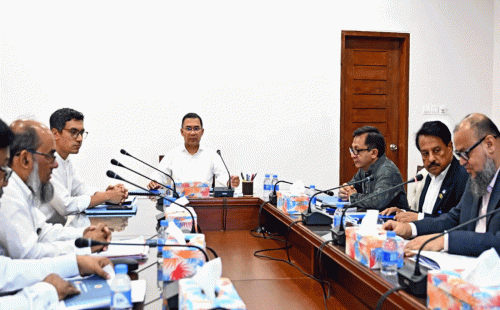
by DSCC, were revealed at an event held at the Nagar Bhaban today (4 June).
According to the survey, 36 workers
from the DSCC and the Communicable Disease Control Unit of the Directorate
General of Health Services collected data from 2,250 households between 12 and
23 May. They detected Aedes larvae and pupae in 281 of those properties.
Among the houses where larvae were found, 35.23% are high-rise buildings,
27.76% are individual houses, 17.44% under-construction buildings, 14.59%
semi-concrete houses.
In terms of breeding sites,
stagnant water accumulated on floors posed the greatest risk, accounting for
12.26% of cases. Buckets 10.34% and plastic drums 8.89% were also identified as
significant breeding grounds.
To address the situation, the DSCC
will launch a five-day special "crash programme" from 7 June in the
27 wards deemed most at risk.
Similar operations will
subsequently be carried out in further 36 wards.
Speaking at the event, DSCC
Administrator Md Abdus Salam said that alongside government initiatives, active
public participation was essential to controlling dengue.
He urged residents to keep their
homes and workplaces clean and to develop the habit of regularly removing
standing water, which serves as a breeding ground for mosquitoes.
Among those present at the event
were DSCC Chief Executive Officer Md Zahirul Islam, Chief Waste Management
Officer Air Commodore Md Mahbubur Rahman Talukdar, Chief Health Officer Dr
Nishat Parveen, and other senior officials.