Newborn deaths at Ad-din hospital: Building unsuitable, oxygen shortage and negligence found, says health minister

The investigation committee formed over the deaths of six
newborns at Ad-din Medical College Hospital has found evidence of negligence by
the hospital authorities, Health Affairs Minister Sardar Md Sakhawat Husain
said today (4 June).
The primary factors behind the
incident included a malfunctioning air-conditioning system, oxygen shortage,
and overcrowding in a small ward, he said while presenting the committee's
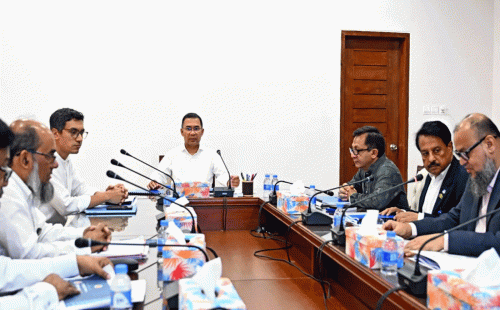
findings at a press briefing at the ministry in the Secretariat.
Legal action would be taken in
accordance with existing laws, he added.
According to the report, the hospital's infrastructure, management, and
healthcare services suffered from multiple serious shortcomings. The committee
found that the building where the hospital was operating was not suitable for
providing medical services.
The investigation also revealed
that oxygen levels in the affected ward had dropped while carbon dioxide levels
increased, creating a highly risky environment for newborns.
The health minister further said
that nurses on duty failed to respond adequately to requests from patients'
guardians. In addition, the ward housed more patients than its designated
capacity, further worsening the situation.
The report noted that the hospital
authorities failed to ensure the necessary standards and preparedness required
to operate the facility. It also identified the absence of any doctor in the
concerned ward at the time of the incident on 27 May as a serious lapse.
"Doctors' absence, nurses'
non-cooperation, and negligence by the hospital authorities have all been
established," the minister said.
He said a decision on punitive
measures against those responsible would be made by Sunday.
The probe committee also
recommended that authorities conduct physical inspections of buildings before
granting licences to private hospitals in the future.
The exact causes of death could not
be determined, as the families of the deceased newborns did not consent to post-mortem
examinations.
The minister also added,
"Following on-site inspections, interviews with victims' families,
doctors, nurses, and staff, and consideration of the overall circumstances, the
investigation committee found absence of doctors on duty, negligence by nurses/staff,
and overall failure of hospital authorities during the time.
The committee also found that the
hospital building was not suitable for operating healthcare services.
After inspecting Post-Operative
Room 2, the committee observed that prolonged shutdown of air-conditioning and
lack of proper ventilation led to a drop in oxygen levels, while carbon dioxide
levels rose above normal limits.
The committee further stated that
testimonies from nurses, cleaners, and the guardians of the deceased newborns
confirmed "serious negligence and lack of cooperation" by the nursing
staff.
There was no active emergency
medical response at the time of the sudden deterioration of the newborns'
conditions.
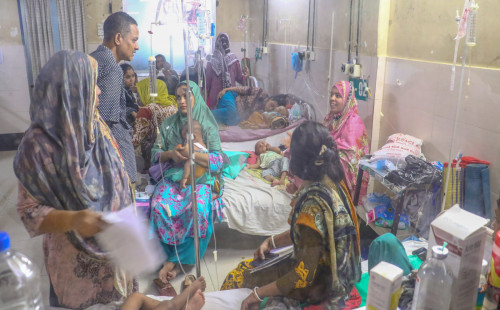
The approximately 900-square-foot room
was overcrowded, containing around 11 patients and nearly 50 people, including
patients and attendants, far exceeding its capacity.
The investigation committee
concluded that the hospital's administrative authorities were not capable of
fulfilling the basic operational requirements of running the facility.