All exporters to get bonded warehouse facilities: Amir Khosru
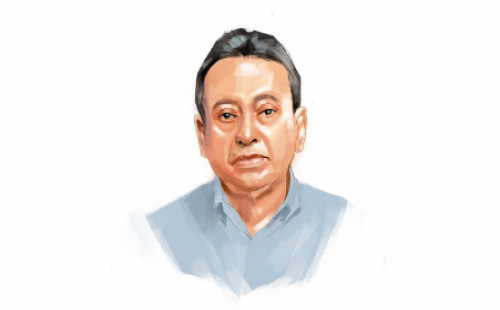
The government plans to extend bonded warehouse facilities
to all export-oriented industries, ending a long-standing policy that primarily
benefited the readymade garment sector, said Finance and Planning Minister Amir
Khosru Mahmud Chowdhury.
The
move is part of a broader deregulation drive aimed at boosting exports,
reducing business costs and encouraging the growth of non-traditional sectors,
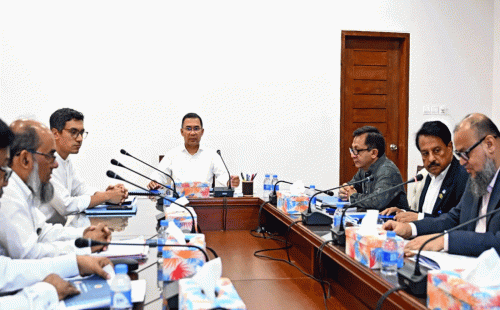
he said at a pre-budget roundtable organised by the Dhaka Forum Initiative
(DFI) yesterday (3 June).
"Anybody
exporting anything from Bangladesh will be given permission for bonded
warehouses. It's not just garments anymore," Amir Khosru said.
The minister said exporters across sectors, including gold jewellery and other
high-value manufactured goods, will be eligible for bonded warehouse facilities
and back-to-back letter of credit (LC) support.
According
to the minister, the government intends to make the scheme more accessible
while reducing administrative burdens and opportunities for harassment.
He
said businesses will no longer be required to renew bonded warehouse licences
annually. Instead, audits will be conducted once every three to five years.
"There
will be no harassment on bond anymore. We will not allow that," he said.
Amir
Khosru said the government wants to create an environment where sectors such as
jewellery manufacturing, diamond processing and other export industries can
grow without being constrained by cumbersome regulations and import duties on
raw materials.
"The
government is also planning to introduce a single-point clearance system for
business licences and approvals, with strict deadlines for government agencies
to respond to applications. Company registration and other regulatory services
will be shifted online and processed within fixed timeframes," added the
minister.
Calling
deregulation a cornerstone of the administration's economic strategy, Khosru
said Bangladesh has historically suffered from excessive regulation that
increased costs and slowed investment.
He
mentioned plans to promote the creative economy by supporting artisans,
cultural workers and rural producers through improved access to finance, design
services, branding, and international markets.
The
government plans to establish a 160-acre creative district near Dhaka as part
of its efforts to develop Bangladesh's creative economy and create new avenues
for employment.
Khosru
also outlined the government's focus on digitalisation, including reforms to
tax administration, port operations and business services.
He
said authorities are exploring partnerships with internationally recognised
testing agencies to reduce delays at Chattogram port and improve trade
facilitation.
The
roundtable brought together policymakers and young entrepreneurs to discuss
investment, regulatory reform, entrepreneurship and Bangladesh's long-term
economic growth strategy ahead of the national budget.