Pakistan mediation raises hopes for US-Iran nuclear breakthrough
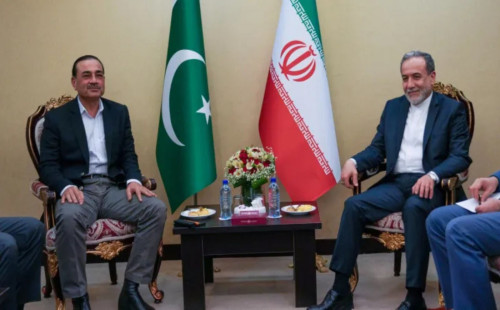
Hopes are
rising for a potential breakthrough in US-Iran talks over Tehran's nuclear
programme, with Pakistani officials expecting what they describe as a
"major breakthrough," sources told Al Jazeera as Islamabad
intensifies diplomatic efforts to end a war that has killed thousands of
people.
The optimism came as a high-level Pakistani
delegation led by Army Chief Asim Munir arrived in Tehran to deliver messages
between Washington and the Iranian leadership, according to Iran's Press TV.
Munir was received by Iranian Foreign Minister
Abbas Araghchi, who thanked Pakistan for its "gracious hosting of
dialogue."
Press TV also reported
that the Pakistani delegation is working to prepare the ground for a second
round of US-Iran talks.
Al Jazeera correspondent Osama Bin Javaid said
Pakistani officials are anticipating "a major breakthrough on the nuclear
front," with Islamabad continuing to act as a channel for communication
between the two sides.
The main point of disagreement remains the
length of Iran's uranium enrichment freeze and the status of its stockpile of
around 440kg of highly enriched uranium.
Bin Javaid noted that discussions have ranged
from a five-year freeze to as long as 20 years, with negotiators exploring
possible middle-ground solutions.
"There's also talk about what Iran will do with the 440kg of
nuclear-enriched material," he said, adding that options include sending
it abroad or diluting it to lower enrichment levels.
He added that "major headway" has
reportedly been made and that Pakistan is expected to play a key role in
persuading Tehran.
Shuttle diplomacy
Pakistan's mediation efforts follow inconclusive
US–Iran talks held in Islamabad over the weekend. Mediators are reportedly
pushing for compromises on Iran's nuclear programme, control of the Strait of
Hormuz—which has been effectively restricted, contributing to rising global oil
prices—and compensation for wartime losses.
The conflict, which began on 28 February, has
killed more than 3,000 people in Iran and triggered retaliatory strikes on Gulf
states.
It has also intensified tensions involving
Israel and Hezbollah in Lebanon, where over 2,000 people have been killed since
early March.
A ceasefire agreed on 8 April has paused
hostilities in Iran and the Gulf, though Israeli strikes in Lebanon have
continued.
Meanwhile, Pakistan's Prime Minister Shehbaz
Sharif visited Saudi Arabia as part of a broader regional tour that also
includes Qatar and Turkey.
Analysts describe the move as part of a
"double-pronged strategy" aimed at securing regional backing for a
potential agreement.
Bin Javaid said Pakistan is engaging multiple
sides, with military and civilian leaderships simultaneously speaking to
different regional powers in an effort to smooth resistance to any deal,
including from Iran, the United States and Israel.
'Very close to over'
US President Donald Trump struck an optimistic
tone, saying the world should expect an "amazing two days" and
suggesting the conflict with Iran was "very close to over."
White House Press Secretary Karoline Leavitt
later said further negotiations are likely to take place in Islamabad,
describing Pakistan-mediated discussions as "productive and ongoing."
Iran's Foreign Ministry confirmed that
communication with the US has continued since the Islamabad talks ended, saying
several messages have been exchanged through Pakistan.
Despite diplomatic momentum, tensions remain
high.
A US naval blockade on Iranian ports in the
Strait of Hormuz continues, with reports that vessels have been turned back by
US Central Command forces.
Iran has condemned the blockade as a violation
of the ceasefire agreement.
Iranian officials have warned of possible
retaliation, including disruptions to regional shipping routes in the Strait of
Hormuz, the Red Sea, the Gulf, and the Sea of Oman, if the blockade is not
lifted.