Iran can go up to two months without oil exports before cutting output, analysts say
Iran can withstand a complete halt in oil exports of up to
two months before being forced to curb production, analysts said, after the US
began blocking shipping in and out of the country's ports on Monday (13 April).
The blockade could prevent roughly
2 million barrels per day (bpd) of Iranian crude from reaching its main buyer,
China.
Any Iranian production shutdowns
would add to more than 12 million bpd of supply already disrupted by the
regional war, tightening markets further and lifting oil prices.
With its exports blocked, Iran faces having to divert crude into onshore
storage tanks. Once those tanks are filled, the OPEC member would be required
to curb upstream output.
Consultancy FGE NextantECA
estimates Iran has about 90 million barrels of available onshore crude storage
capacity, out of a total capacity of roughly 122 million barrels.
"Iran can sustain current production
of around 3.5 million bpd for roughly two months without exports, extendable to
around three months with a modest 500,000 bpd production cut," FGE
NextantECA said in a note.
Iranian domestic refineries process
about 2 million bpd of oil, they added.
The relevant Iranian authorities were not immediately available for comment.
Energy Aspects assumes
significantly lower available onshore storage of about 30 million barrels,
based on data from Kayrros.
Under that scenario, Iran could
maintain current export levels for about 16 days before storage capacity runs
out, based on export levels of 1.8 million bpd.
"The blockade may not have a
significant impact on Iranian production in April, but if it continues into May
then output would need to be reduced substantially," said Richard Bronze,
co-founder of Energy Aspects.
He said the consultancy assumes
Iran cannot utilise its full nameplate storage capacity, adding that historic
data show stocks peaked at 92 million barrels in May 2020, which likely marks a
realistic ceiling.
Bronze also said Iran will likely
deploy available oil tankers in ports as floating storage, delaying production
cuts.
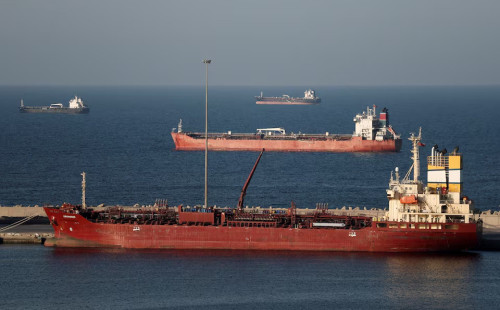
The US military said more vessels
were being turned back under the blockade, including the Chinese-owned tanker
Rich Starry, which is under US sanctions and which was seen heading back
through the Strait of Hormuz on Wednesday.
Eight Iran-linked oil tankers have
been intercepted since the blockade began on Monday, the Wall Street Journal
reported.
A US destroyer stopped two tankers
attempting to leave Iran's Chabahar port on the Gulf of Oman on Tuesday (14
April), a US official said