Reform stalemate: BNP, Jamaat in ‘back-channel dialogue’
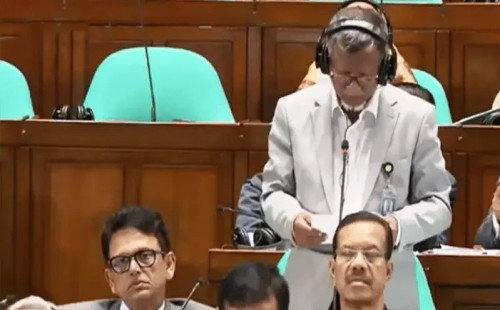
While treasury and opposition lawmakers clash on the
parliament floor over the July charter implementation order, the two sides are
also holding back-channel talks outside the assembly hall to end the stalemate.
Several insiders said government and opposition
representatives have met privately to seek an understanding on key contentious
issues, including the ordinance to prevent enforced disappearances.
The July National Charter (Constitutional Reform)
Implementation Order, 2025, issued by the president on November 13, 2025,
outlines a framework for adopting reforms proposed in the July charter.
During the talks, the opposition warned it will step
up street protests if the government fails to show visible progress or take
practical steps within a reasonable timeframe, the insiders said.
The sources added that the BNP leadership is taking
these signals seriously and monitoring the situation closely, but has not yet
made any final decision on how to proceed. The government is, however, willing
to ease its stance on the Enforced Disappearance Prevention and Redress
Ordinance.
According to top BNP leaders, the timing of the
standoff is critical, as the government is already grappling with several
national and international challenges, including the energy crisis and the
measles outbreak. They said an opposition movement at this juncture could
create instability and further strain the state’s capacity.
They added that opposition parties may also use the
issue during the upcoming local polls, accusing the ruling party of betraying
the “spirit” of the July uprising, which could affect the BNP’s public support
and influence election results.
Meanwhile, sources within the opposition said putting
pressure on the BNP is part of a broader political strategy aimed at ensuring
their demands are met.
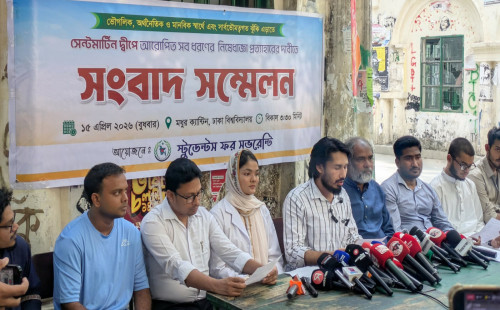
While the main opposition Jamaat-e-Islami held talks
with the ruling party inside parliament yesterday, its 11-party alliance announced
a series of protest programmes outside, reiterating the same demands.
According to the schedule, leaders and activists will
carry out leaflet distribution and public outreach programmes nationwide from
April 9 to April 15.
A BNP Standing Committee member said the party has not
changed its position on the Constitution Reform Council, arguing that its
members are not required to take an oath and that the proposed structure may
conflict with the existing constitution, raising legal and procedural concerns.
Ruling party leaders have also indicated in parliament
that they wish to amend the Enforced Disappearance Prevention and Redress
Ordinance.
Law Minister Md Asaduzzaman said the International
Crimes Tribunal Act already includes enforced disappearance as a crime against
humanity and sets out trial and investigation procedures.
“At the same time, in the Enforced Disappearance
Prevention and Redress Ordinance, we are proposing a separate investigation
process. Under the ICT Act, the maximum punishment is either death or life
imprisonment, but in the ordinance, the maximum sentence has been limited to 10
years,” he said in parliament on Sunday, while responding to Jamaat MP Mir
Ahmad Bin Quasem, who criticised a parliamentary committee’s refusal to ratify
the ordinance as a law.
Quasem said that if the government wants changes, it
should first approve the ordinance, turn it into law, and then amend it later.
He warned that if no action is taken, the law will expire on April 11, leaving
no legal definition of enforced disappearance from the following day.
According to constitutional obligation, the House must
convert ordinances into laws within 30 days of the commencement of parliament,
or they become defunct. To this end, a special committee was formed, comprising
13 lawmakers and chaired by BNP leader Zainul Abedin.
The committee said the anti-enforced disappearance
ordinance should be tabled as a bill only after further scrutiny.
Meanwhile, parliament on Tuesday passed the amended
International Crimes Tribunal Bill.