PM Tarique seeks time from UN for LDC graduation amid economic strain
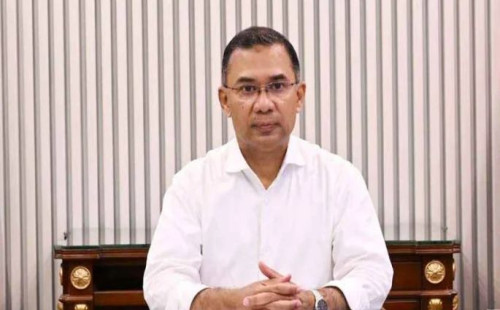
Prime Minister Tarique Rahman has sought additional time
from the United Nations for Bangladesh's graduation from Least Developed
Country (LDC) status, citing current economic challenges.
In a letter sent to UN
Secretary-General António Guterres, the prime minister said the country is
going through a difficult economic phase and requires time to stabilise before
completing the transition.
The letter highlights pressures
from the global economic situation, rising import costs and strain on foreign
exchange reserves, which have made economic stabilisation a priority.
The government, however, reaffirmed its commitment to
graduating from LDC status and said it does not intend to move away from the
process.
Instead, it has sought temporary
flexibility to allow the economy to recover and reach a more stable position.
Officials said the additional time
would help strengthen the country's production sector, export capacity and
overall economic structure, making the eventual transition more sustainable.
According to the Economic Relations
Division, in the current global context, several countries are seeking policy
flexibility to manage economic pressures, and Bangladesh's request is being
viewed as a strategic step.
Here is the full letter:
"I have the honour to write to
you at a pivotal moment in our national life, as my government has assumed
office with a decisive and historic mandate following last February's landmark
general election
"For far too long, Bangladesh
endured the erosion of public institutions and a widening disparity in
opportunity and development. Our people's resounding endorsement of us reflects
their deep yearning for stability, justice and renewal. Guided by this
confidence, we are committed to restoring the rule of law, strengthening
democratic institutions, and pursuing inclusive development anchored in human
rights, social equity and environmental sustainability. Among the most
time-bound priorities is Bangladesh's scheduled graduation from the LDC
category on 24 November 2026, as per General Assembly resolution 76/8. While
graduation has long been a national aspiration, successive crises and an
accumulation of internal and external challenges have compelled us to undertake
a careful, evidence-based reassessment of our readiness and associated risks.
"Excellency, we fully share
your view that graduation must be a reward, never a punishment. We also believe
that sustainable graduation is not only a country-specific issue but is
critical to the credibility of the United Nations development paradigm. We are
the largest LDC in terms of population, GDP and merchandise exports. Our
sustained progress has been driven in large part by LDC-specific international
support measures, including duty-free and quota-free market access and
flexibilities in areas such as intellectual property. The withdrawal of these
measures upon graduation poses substantial development challenges with a real
risk of reversing our development gains. You would kindly appreciate that, if a
country representing nearly one-fifth of the total LDC population were to
embark on an unsustainable post-graduation trajectory, it would raise
fundamental questions about the robustness of the existing global framework.
"We have inherited a severely
strained macroeconomic environment, marked by prolonged capital flight, limited
access to finance for the private sector, a weakened capital market, financial
sector vulnerabilities, rising poverty, and mounting pressure on the banking
system. Most key macroeconomic indicators have shown a downward trend. These
challenges have been compounded by overlapping shocks, including the lingering
socio-economic impacts of the Covid-19 pandemic, climate-induced disasters such
as the 2024 floods, and global price volatility driven by new geopolitical
tensions, further constraining our fiscal space and institutional capacity.
Since assuming office, the government has been actively engaged in stabilising
the economy and addressing these pressing challenges with utmost priority. At
the same time, Bangladesh continues to bear the humanitarian responsibility of
hosting a large displaced Rohingya population, despite a decline in
international support. We thank the UN-OHRLLS for underscoring many of these
vulnerabilities very aptly in its Graduation Readiness Assessment. Furthermore,
the IMF, in a recent report, noted continued inflationary pressures, growth
deceleration and mounting structural risks, while recognising prospects for
medium-term recovery through sustained reforms.
"Furthermore, consideration of
Bangladesh's graduation is taking place at a time when we are confronted with
massive energy challenges arising from ongoing conflicts. The International
Energy Agency has expressed the view that the present energy crisis is worse
than the twin oil crises of the 1970s, which rendered. The 1980s were a lost
decade of development for developing countries. The current energy challenges
have already put our economy under severe stress. Years of painstaking progress
made by our people are at a grave risk of being reversed.
"Regrettably, most of the
designated five-year preparatory period during the regime preceding the interim
government went by without adequate progress on readiness efforts. Only in
February last year was a Smooth Transition Strategy adopted. Naturally, its
implementation remained limited given the short tenure of the interim
administration and the immediate stabilisation tasks it was entrusted with.
"We are, therefore, in urgent
need of a further extension to ensure a smooth, sustainable and resilient
graduation in the spirit of General Assembly resolution 67/221. Accordingly, my
government has already initiated the crisis-response process through a
technical submission to the Committee for Development Policy (CDP), seeking a
three-year extension in line with paragraph 284 of the Doha Programme of Action
and the modalities of the CDP's enhanced monitoring mechanism.
"Excellency, graduation is not
merely about meeting the prescribed criteria; it must be smooth, sustainable,
and irreversible. Achieving this requires a coordinated,
whole-of-the-international-community approach. Our government has set an
ambitious goal in its election manifesto to transform Bangladesh into a
million-dollar economy by 2034. We have already begun implementing this vision
through well-defined, time-bound policies and strategies. In this context, an
extension of the preparatory period is critically important to ensure that this
transition is achieved in a stable and sustainable manner.
"With full confidence, we
kindly seek your personal support in ensuring that our request receives due
consideration across the United Nations system, including through transmission
of this communication to the CDP and the President of ECOSOC. Let me reaffirm
that our aim is not to avert the coveted graduation but to ensure that it is
sustainable, resilient and truly irreversible."