Export development fund may rise to $5b
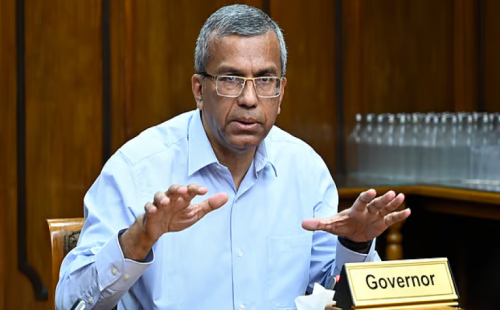
Bangladesh Bank Governor Md Mostaqur Rahman yesterday
assured business leaders that the export development fund (EDF) may be
gradually expanded to $5 billion, according to the Federation of Bangladesh
Chambers of Commerce and Industry (FBCCI).
The assurance came during a meeting held at the central bank
in Dhaka with FBCCI leaders, said Md Alamgir, secretary general of the apex
business body, after the meeting.
Alamgir told journalists that the EDF, formed from foreign
exchange reserves to support exporters, once stood at $7 billion but has now
declined to around $2.2 billion.
Business leaders urged the central bank to raise the fund to
$5 billion, and the governor responded positively, assuring that the amount
would be increased in phases, he added.
On lending rates, Alamgir said business leaders stressed the
need to keep interest rates stable to encourage investment and maintain
industrial competitiveness.
They also recommended gradually bringing lending rates down
to single digits.
The business leaders further urged the central bank to
increase credit flow to the private sector, saying financing should be directed
more towards productive sectors by reducing pressure from public-sector
borrowing.
Mohammad Hatem, president of the Bangladesh Knitwear
Manufacturers and Exporters Association, said the proposal to expand the EDF
had received the governor’s agreement.
“The fund was reduced because of IMF-related conditions. We
have proposed raising it from around $2.5 billion to $5 billion first, and
later to $8 billion,” Hatem said.
He added that business leaders also sought relaxation in
loan classification rules.
At present, borrowers are classified as defaulters if they
fail to repay loans for three months.
Business leaders proposed extending that period to six
months. They also urged the central bank to stop the practice under which one
defaulting business affects the classification status of its affiliated
entities.
In addition, business leaders proposed extending the
repayment period after loan rescheduling from the current four to five years to
10 years.
FBCCI also recommended introducing low-cost green financing
facilities to encourage investment in renewable energy, including solar power,
to reduce energy costs.